Photographing an Extended Family at Christmas
Seasonal Photoshoot Field Guide · Groups and family storytelling · Practical guide
Extended-family gatherings move quickly and include people with different levels of comfort, mobility, and patience. A short, agreed group list, one indoor off-camera flash setup, and a tested group position make formal photographs efficient, leaving more of the celebration for being present.
Use the gathering date that actually fits the family; the programme's preferred window is 24–26 December. The target is 12–18 finished photographs by 3 January.
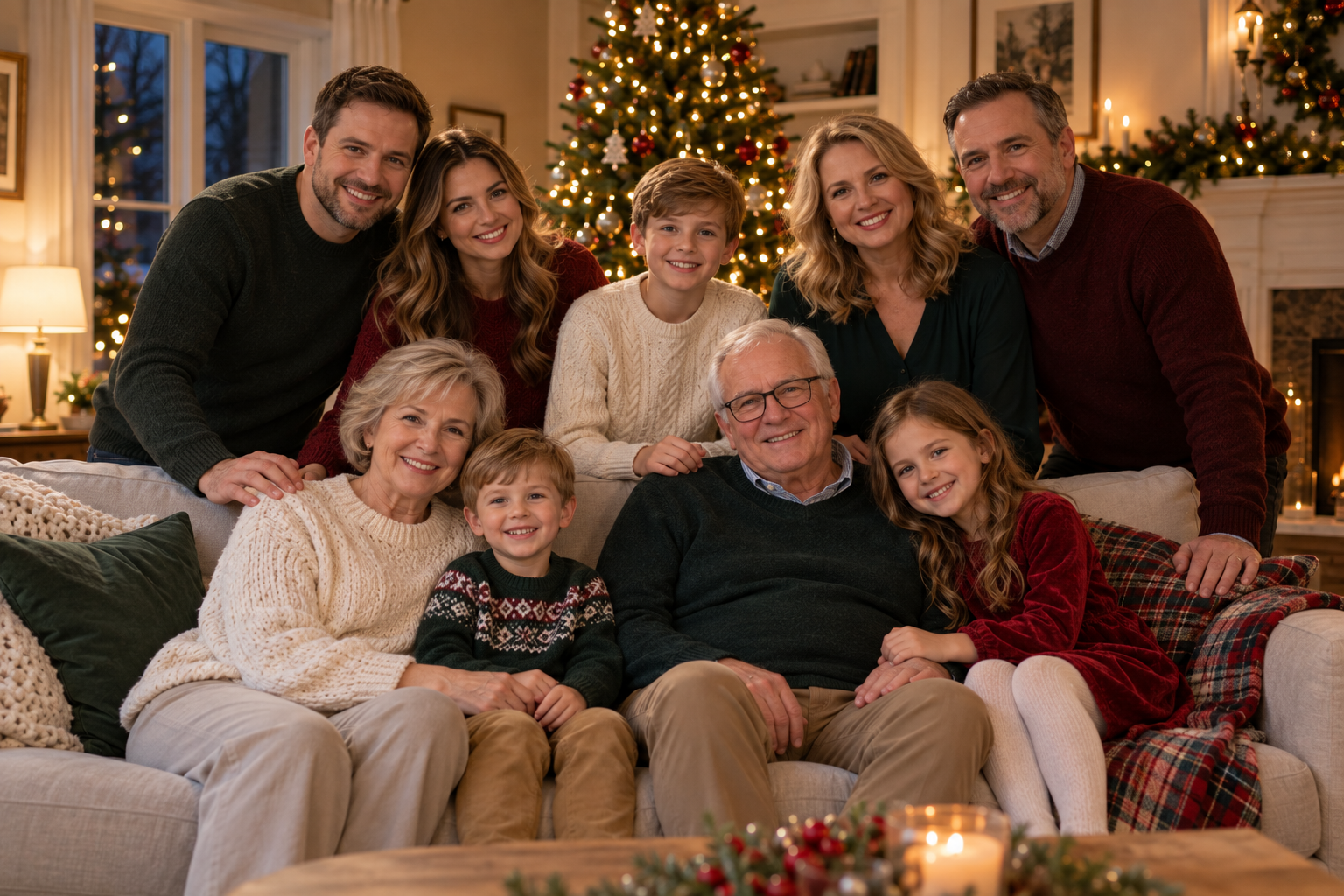
Generated illustration of a possible group arrangement, not a real family photograph. Adapt seating and spacing to the people present and make sure everyone is comfortable and visible.
Agree the essentials in advance
- Ask who is expected and which group combinations matter most.
- Make a short named list: whole group, households, generations, and grandparents with grandchildren where applicable.
- Ask whether anyone needs a chair, a quieter moment, or extra time.
- Choose one place with enough room for everyone and a clear background.
- Plan one off-camera flash with a familiar modifier and trigger. Confirm compatibility with the actual flash; historical notes mention an AD300Pro, TT685II speedlights, and 60/120 cm modifiers, but current availability and compatibility are unconfirmed.
- Rehearse with adults where to place the light stand and group. Secure and supervise the stand, keep it outside walking paths, and keep children away from equipment and cables.
- Decide who will call groups together and how the photographer will be included in the whole-family frame.
Ask permission before photographing people closely or sharing images. Keep the plan easy to change if attendance or energy differs from expectations.
Arrange the group and light
Make a no-flash frame first to decide how much room and practical-light ambience to retain. Place one off-camera flash on the camera side of the group, slightly above face level, and test coverage across the nearest and farthest people. A larger modifier, if available and compatible, may help spread light; moving the flash farther back or feathering it across the group can also reduce uneven brightness. These are options to test, not fixed recipes.
Arrange people so faces are visible: stagger standing and seated rows as appropriate, leave space between heads, and check that no one is hidden. Keep the flash stand stable, supervised, and clear of routes people use.
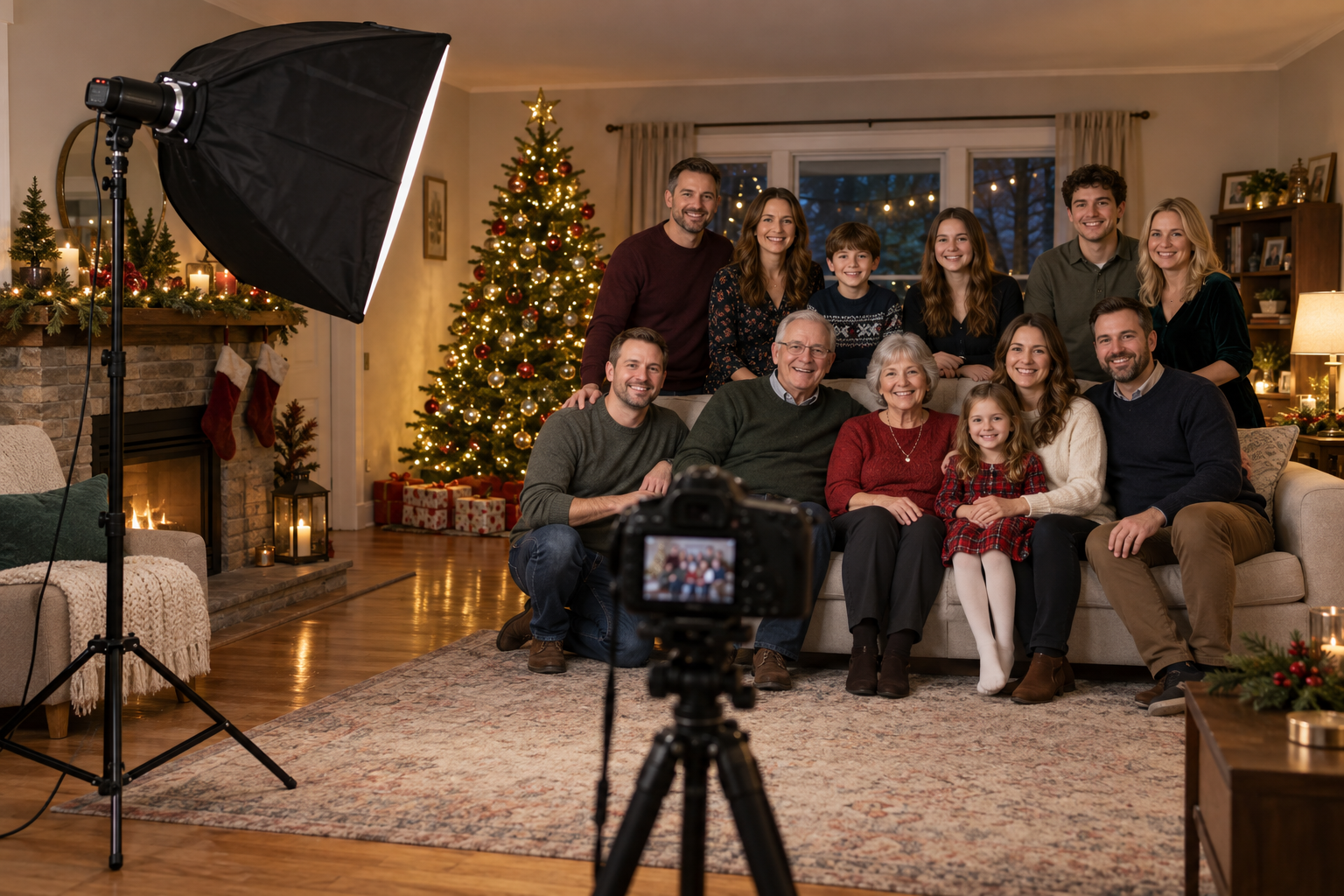
Generated setup illustration, not a measured lighting diagram or verified coverage test. Use it as a starting idea; actual placement depends on the room, group, and modifier.
Use a focal length and camera position that avoid stretching people at the edges. Choose aperture for the group depth and shutter speed for movement while staying within flash-sync limits. Remember aperture and ISO affect both flash and ambient exposure; shutter speed primarily changes ambient exposure during normal flash sync. Make a test with the group—or a few stand-ins—and inspect the outer faces as well as the centre.
If one light cannot cover the group evenly in the available room, simplify the arrangement, bring the group closer together, or choose a better room. Do not add a second light for the first time during the gathering.
Photograph groups efficiently
Photograph people who need to sit or rest first. Call one combination at a time, confirm everyone is ready, and take a few frames while checking expressions and open eyes. Then release that group before assembling the next.
After the formal combinations, capture a small candid sequence: arrival, shared preparation, a conversation, a gift reaction, children playing with an adult nearby, and a quiet portrait. Photograph respectfully and put the camera away for part of the celebration.
Essential frames
- Whole family, with everyone visible.
- Each household.
- One generations grouping.
- Grandparents with grandchildren if wanted and applicable.
- A few candid interactions and one environmental view.
- A frame that includes the photographer, using a helper or a tested timer.
Do not treat this list as a demand to photograph every guest in every possible combination.
Try this / avoid this
Try: keep the group list on a phone or card; use a clear verbal call; test flash coverage with stand-ins before people gather; confirm back-row and edge faces are sharp.
Avoid: leaving the stand unsecured or in a walkway; leaving the most tired people waiting; interrupting meals or meaningful moments repeatedly; adding untested lights or making photography dominate the gathering.
Cull and review
Select 12–18 varied photographs if the available frames support that number. Prioritise sharp, open expressions and visible relationships over duplicates. Make basic consistent edits and finish by 3 January as planned.
Record which group combinations were completed, any requested omissions, the light setup, and what you would simplify next time. A missed combination should be recorded, not reconstructed in notes as if it happened.